Study MBBS at Collegium Medicum Bydgoszcz, Poland: Complete Guide for International Students (2026)
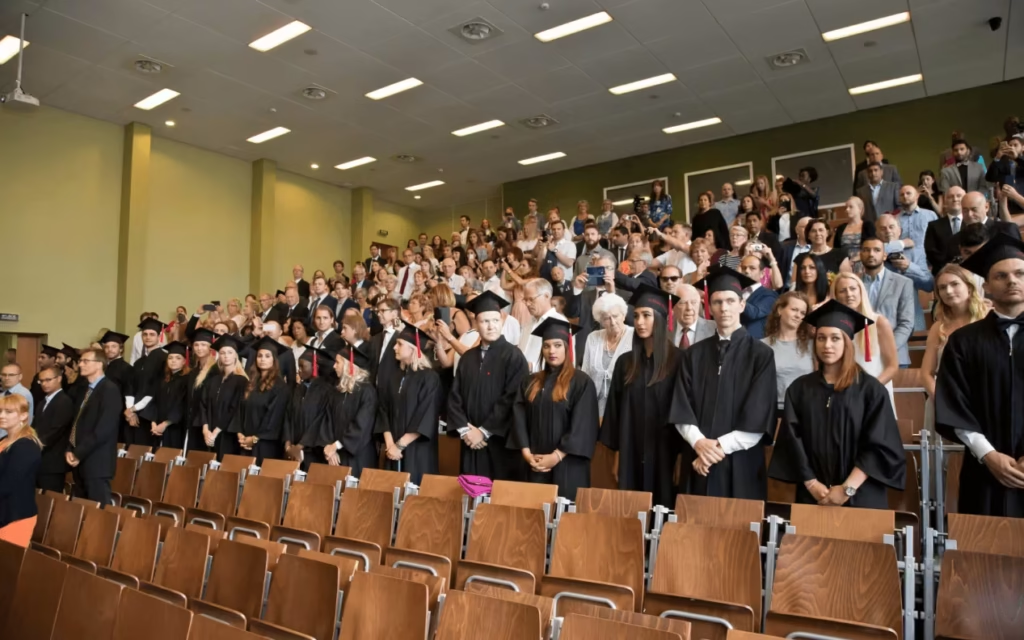
Study MBBS at Collegium Medicum Bydgoszcz, Poland: Complete Guide for International Students (2026) Choosing the right medical university is one of the most important decisions for any aspiring doctor. If you’re considering studying medicine in Europe, Collegium Medicum Bydgoszcz, a part of Nicolaus Copernicus University (NCU), is a public medical institution that offers a well-structured English-medium MD programme for international students. The university combines quality education, modern clinical training, affordable living costs, and international recognition, making it a popular destination among students from India and many other countries. In this guide, you’ll find detailed information about the university, tuition fees, admission procedure, eligibility requirements, accommodation, and official resources to help you plan your application. About Collegium Medicum Bydgoszcz Collegium Medicum is the medical faculty of Nicolaus Copernicus University, one of Poland’s leading public universities. While the university’s main campus is located in Toruń, the medical campus operates in Bydgoszcz, a student-friendly city known for its affordable cost of living and quality healthcare infrastructure. The medical programme is administered through the Centre for Medical Education in English (CMEE) and has welcomed international students since 2009. University Highlights Public university in Poland Located in Bydgoszcz English-medium Doctor of Medicine (MD) programme Six-year integrated medical course International student community Modern university hospitals for clinical training Why Consider Studying Here? Many students choose Collegium Medicum Bydgoszcz because it offers the advantages of studying at a European public university without the exceptionally high tuition fees charged by some Western European institutions. Some notable benefits include: English-taught medical programme Extensive practical and clinical exposure Affordable accommodation Recognized medical qualification Modern campus infrastructure Experienced academic faculty Safe and affordable student city MD Programme Overview The university offers a 6-year Doctor of Medicine (MD) programme that follows European higher education standards. Course Structure Students begin their education with a preparatory module covering: Biology Chemistry Physics Basic Polish language The programme then progresses through: Pre-clinical medical sciences Laboratory-based education Clinical rotations Summer hospital placements after Years 1 to 5 Final state examinations Polish language classes continue during the early years to prepare students for communication with patients during hospital training. Tuition Fees for 2026 According to the official university fee schedule, tuition fees remain fixed for each admitted batch throughout the programme. Fee Component Amount Per Semester PLN 31,500 Per Academic Year PLN 63,000 Total Tuition (6 Years) PLN 378,000 The overall tuition is approximately ₹84 lakh, depending on currency exchange rates. Additional Fees Students should also budget for: Application fee: PLN 85 Repeat classes: PLN 60 per teaching hour (if applicable) Official document-related charges No separate seat confirmation or large admission deposit is listed by the university. Student Accommodation International students have access to Student House DS3, one of the university’s dedicated residences. Accommodation Options Room Type Monthly Fee Single Room PLN 1,150 Double Room PLN 850 per student Facilities Available Private bathrooms Shared kitchens Internet access 24-hour monitored premises Accessible facilities Walking distance to teaching hospitals The residence provides a comfortable environment for both local and international students. Eligibility Criteria Before applying, candidates should ensure they meet the academic and language requirements. Academic Qualifications Applicants should have completed higher secondary education with: Biology Chemistry or Physics English Language The university expects applicants to demonstrate B2-level English proficiency. An IELTS score around 6.5 generally satisfies this requirement. Other Requirements Students should also have: Valid passport Medical fitness certificate Apostilled educational documents Diploma recognition through Poland’s NAWA system Admission Procedure The admission process is conducted online and includes several stages. Online Registration Applications are submitted through the university’s IRK admission portal. Official Portal:https://irk.umk.pl/ Document Submission Candidates upload academic certificates, passport details, and supporting documents before paying the application fee. Written Entrance Test Applicants appear for an online examination consisting of: Biology (30 questions) Chemistry (12 questions) Physics (8 questions) Candidates need at least 25 marks out of 50 to proceed. Interview Shortlisted applicants attend an online interview that evaluates: Scientific knowledge Motivation for studying medicine English communication skills The final admission decision is based on the combined written and interview score. Documents Required Applicants generally need the following documents: Class 10 certificate Class 12 marksheet and certificate Academic transcripts Passport English language certificate Medical fitness certificate Apostilled or legalized educational documents Eligibility statement (if applicable) NAWA diploma recognition Because diploma recognition may take several weeks, students should begin the process well before the application deadline. Recognition Collegium Medicum Bydgoszcz enjoys international recognition and is listed in several important medical education directories. The university is: Recognized within the European Union Listed in the WHO World Directory of Medical Schools Recognized by the General Medical Council (UK) Structured to comply with current National Medical Commission (NMC) regulations for Indian students, subject to applicable rules Students should always verify the latest licensing requirements in the country where they intend to practice. Living in Bydgoszcz Compared with many European cities, Bydgoszcz offers an affordable lifestyle for students. Common monthly expenses include: Accommodation Meals Local transport Utilities Personal expenses The city’s lower living costs make it an attractive option for international medical students. Important Dates The admission cycle generally begins in April. Students should monitor the official university website for updates on: Application opening dates Entrance examination schedule Interview dates Document submission deadlines Final admission offers Official admission information is available here: https://study.cm.umk.pl/dates-deadlines-2025-26/ Useful Official Resources To avoid misinformation, always rely on official university sources. Centre for Medical Education in English: https://study.cm.umk.pl/ Collegium Medicum: https://en.cm.umk.pl/ Medicine Programme: https://study.cm.umk.pl/medicine/ Admission Portal: https://irk.umk.pl/ Tuition Fees: https://study.cm.umk.pl/tuition-fees-candidates/ Student Accommodation: https://study.cm.umk.pl/accommodation-ds3/ NAWA Diploma Recognition: https://syrena.nawa.gov.pl/ Final Thoughts Collegium Medicum Bydgoszcz is an excellent option for students seeking a European medical degree from a public university. Its English-medium curriculum, practical clinical training, modern hostel facilities, and internationally recognized qualification make it a competitive choice for aspiring doctors. Before submitting your application, review the latest eligibility requirements, prepare your documents carefully, and keep track of the official admission schedule. Applying early can make the process smoother, especially when document legalization and diploma recognition are involved. For students looking to
MBBS in Europe 2026: 3 Top Medical Universities Indian Students Must Apply to Before July Deadlines
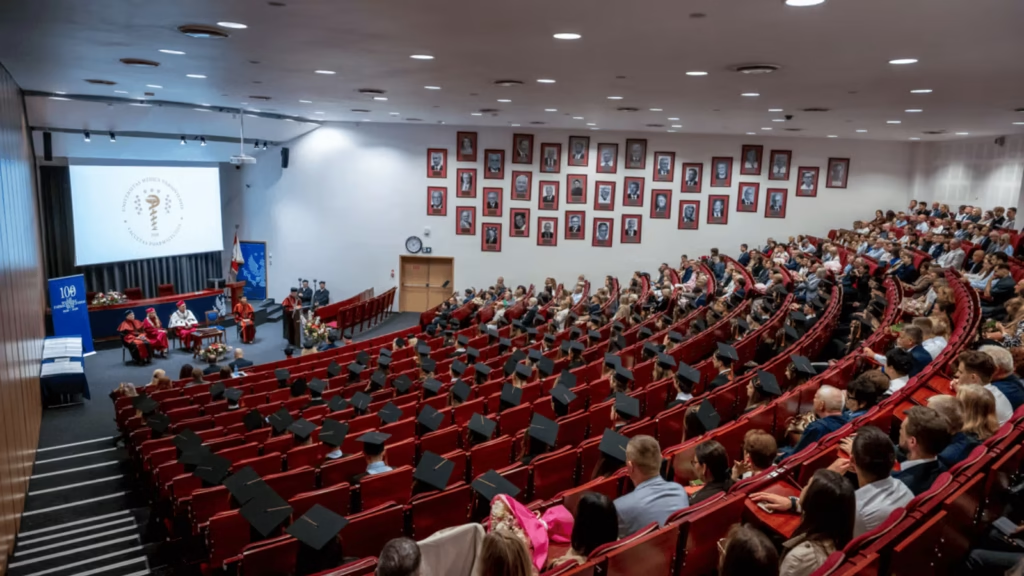
MBBS in Europe 2026: 3 Medical Universities Indian Students Must Apply to Before July Deadlines For Indian students planning to pursue MBBS abroad in 2026, the next few weeks could be extremely important. Several well-recognized European medical universities are currently accepting applications, but the admission windows are closing quickly. Missing these deadlines could mean waiting another year or having fewer options to choose from. Three major opportunities are currently available: Medical University of Warsaw, Poland – Application Deadline: 30 June 2026 Carol Davila University of Medicine and Pharmacy, Romania – Application Deadline: 6 July 2026 Iuliu Hațieganu University of Medicine and Pharmacy, Cluj-Napoca, Romania – Application Deadline: 16 July 2026 Each university has its own admission process, fee structure, and selection criteria. Here’s a detailed guide to help students understand their options and make informed decisions. 1. Medical University of Warsaw, Poland Application Deadline: 30 June 2026 Among the three universities, this is the most urgent application deadline. The Medical University of Warsaw is one of Poland’s most respected medical institutions and remains a popular destination among international students. Step-by-Step Admission Process Step 1: Create an ORS Account Students must first register on the university’s Online Registration System (ORS). Step 2: Pay the Application Fee Application Fee: €24 Step 3: Take the MUW Competency Test The entrance test contains 80 questions: Biology: 30 Questions Chemistry: 30 Questions Decision-Making: 20 Questions Step 4: Merit Ranking The final admission ranking is based on: Class 11 and Class 12 academic performance Competency Test score Step 5: Admission Confirmation Selected students are required to pay: €1,000 confirmation fee This amount is adjusted against the tuition fee. Refund Rule Students who withdraw in writing before 15 July 2026 may receive: €500 refund Tuition Fee €18,800 per year Approximately ₹18–19 lakh annually, depending on the exchange rate. Important Clarification Many students assume that possessing UCAT, BMAT, or MCAT scores automatically exempts them from the competency test. This is not correct. Students must obtain written approval from the university’s Admission Board before any exemption can be granted. Immediate Action Required Register before 30 June. Pay the application fee. Begin preparing for the competency test. Complete qualification procedures before 1 July. 2. Carol Davila University of Medicine and Pharmacy, Bucharest Application Deadline: 6 July 2026 Carol Davila University is one of Romania’s most recognized medical universities and attracts students from around the world. One of its biggest advantages is that there is no written entrance examination. Step-by-Step Admission Process Step 1: Online Registration Students must apply through the university’s official admission portal. Step 2: Upload Documents Applicants generally need to submit: Class 10 Certificate Class 12 Certificate Passport Other supporting documents required by the university Step 3: Online Scientific Interview After document verification, candidates attend an online interview. Step 4: Merit Evaluation Selection is based on: Biology grades Chemistry grades Interview performance No written entrance examination is conducted. Tuition Fee Approximately: €8,500 to €10,000 per year Why Students Consider Carol Davila No entrance examination Lower tuition fee compared to Warsaw Internationally recognized university WHO-listed institution GMC-recognized university Important Document Requirement Students should begin arranging: Romanian translations Apostille certification Many applications get delayed because candidates underestimate the time needed to complete these procedures. Immediate Action Required Submit the application before 6 July. Start the Apostille process immediately. Arrange translated documents as early as possible. 3. Iuliu Hațieganu University of Medicine and Pharmacy, Cluj-Napoca Session II Deadline: 16 July 2026 This university offers the greatest flexibility among the three because of its later deadline. Step-by-Step Admission Process Step 1: Prepare Academic Documents Students need: Academic transcripts Passport Supporting educational documents Step 2: Meet English Language Requirements Applicants must provide: A B2 English language certificate or Proof that previous education was completed in English. Step 3: File Evaluation No entrance examination is conducted. Admission is based on document assessment. Step 4: Merit Evaluation The university evaluates: Academic performance Submitted documents Overall application profile Step 5: Seat Confirmation Selected students must pay: €300 processing fee (non-refundable) 50% of the first-year tuition fee Step 6: Visa Preparation Students are required to pay the full first-year tuition fee before starting the visa process. Tuition Fee €10,000 per year Important Warning Students should apply to the main Cluj-Napoca campus. Applicants should avoid confusion with the newer Novara (Italy) extension campus, which is still operating under provisional authorization. Immediate Action Required Apply before 16 July. Keep the €300 processing fee ready. Budget for the initial tuition payment after selection. Which University Should You Choose? The answer depends on your priorities and preferences. Medical University of Warsaw may suit students who: Prefer a highly ranked European university. Are comfortable appearing for an entrance examination. Have a larger education budget. Can complete the application before 30 June. Carol Davila University may suit students who: Prefer admission without a written entrance examination. Are looking for lower tuition fees. Want a relatively faster application process. Are comfortable with interview-based admissions. Iuliu Hațieganu University may suit students who: Need additional time to complete their application. Are still preparing documents. Prefer admission based on academic records. Want to study at a well-established Romanian medical university. Important Requirements for All Students NEET Qualification Is Mandatory Indian students must maintain a valid NEET qualification for: MBBS admission abroad Future eligibility to practice in India FMGE/NExT requirements Check NMC Compliance Carefully Before choosing any university abroad, students should ensure that the programme complies with the latest National Medical Commission regulations. These programmes generally offer: Six-year duration English-medium instruction Single-institution training These features align with the current Foreign Medical Graduate requirements. Start the Visa Process Early Student visa processing for Poland and Romania can take several weeks. Students should not wait until the last moment after receiving their admission offers. Final Advice One of the biggest mistakes students make is applying to only one university. The cost of submitting multiple applications is relatively small compared to the importance of securing a medical seat abroad. Applying to more than one university provides: Greater flexibility Backup options
Hand in Hand for International Talents Germany: The Free Government Job Placement Program for Skilled Indian Workers in 2026
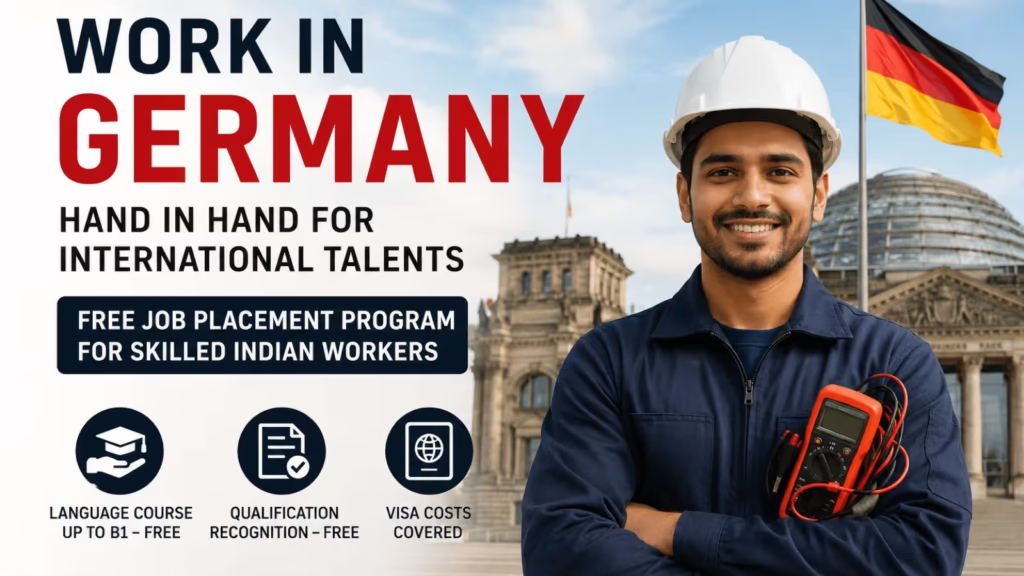
Hand in Hand for International Talents Germany: The Free Government Job Placement Program for Skilled Indian Workers in 2026 When Indians explore opportunities to work in Germany, most people usually come across only two official pathways. The first is APAL, which helps candidates move to Germany through vocational training (Ausbildung). The second is Triple Win, Germany’s well-known government recruitment programme for qualified nurses. However, there is another official pathway that remains relatively unknown among Indian professionals. It is called Hand in Hand for International Talents. Unlike Ausbildung, this is not a training programme. Unlike Triple Win, it is not restricted to healthcare professionals. Instead, it is specifically designed for already-qualified and experienced skilled professionals who want to secure direct employment in Germany. Even more importantly, the programme is government-supported and free for eligible candidates. What Is Hand in Hand for International Talents? Hand in Hand for International Talents is an official German recruitment project jointly operated by: The https://www.arbeitsagentur.de/en Federal Employment Agency (Bundesagentur für Arbeit) through its international placement service, ZAV. DIHK Service GmbH, the service company of Germany’s Chambers of Commerce and Industry (IHK). The project receives funding from the German Federal Ministry for Economic Affairs and Climate Action. The objective is to create a transparent, structured, and end-to-end migration pathway for international skilled workers. The programme currently focuses on recruiting professionals from: India Brazil Vietnam The Philippines Selected candidates receive support throughout the complete process, including: Recruitment and employer matching Qualification recognition German language preparation Visa processing Relocation support Direct job placement in Germany The final destination is employment with a genuine German company belonging to the IHK network. How Is It Different from APAL and Triple Win? Understanding the distinction is extremely important. Many Indian professionals mistakenly assume that moving to Germany requires either joining an Ausbildung programme or paying private agents for job opportunities. Hand in Hand offers a third official route. Comparison of Official Germany Pathways Programme Designed For APAL Candidates seeking vocational training (Ausbildung) Triple Win Qualified nurses Hand in Hand Experienced skilled professionals seeking direct employment Simply put: If you already possess qualifications and work experience, you may not need to begin again as an apprentice. Instead, you could qualify for direct employment through this government-supported programme. Which Professions Are Covered? The programme currently focuses on occupations experiencing workforce shortages in Germany. Technical and Industrial Trades Electricians Electronics Technicians Electrical Engineering Professionals Mechatronics Technicians Automation Specialists Metal Processing Professionals Industrial Technicians Information Technology IT Professionals ICT Specialists Technical Support Professionals Hospitality and Gastronomy Chefs Cooks Hotel Professionals Hospitality Specialists At present, the strongest focus areas include: Electrical Engineering Information Technology Hospitality and Catering Germany continues to experience significant shortages across these sectors, creating strong demand for experienced professionals. Eligibility Requirements for Indian Applicants Although requirements may vary depending on the profession, applicants generally need to fulfil the following conditions. Recognised Professional Qualification Candidates should possess a relevant vocational or professional qualification. The qualification is assessed through Germany’s official recognition process, generally handled by IHK FOSA. Practical Work Experience Applicants are generally expected to have: At least two years of practical professional experience in their occupation. German employers prefer experienced professionals who can integrate quickly into the workplace. German Language Requirement Candidates are normally expected to demonstrate: German language proficiency at B1 level before entering Germany. Strong communication skills are essential for successful integration both professionally and socially. The Biggest Advantage: Major Costs Are Covered This is what makes Hand in Hand particularly attractive. The programme covers three of the most expensive and complicated parts of moving to Germany. German Language Training The project finances German language training up to B1 level. Qualification Recognition Costs related to the professional recognition procedure are covered. Visa Costs Visa-related expenses are also supported through the programme. For many Indian skilled workers, these three components represent the biggest financial and administrative challenges. Through this official route, candidates can avoid paying large amounts to private intermediaries. Why Does This Matter for Indian Skilled Workers? Germany is currently facing one of Europe’s largest skilled worker shortages. The country urgently needs qualified professionals in areas such as: Technical trades Manufacturing Engineering Information Technology Hospitality For Indian electricians, mechatronics technicians, IT professionals, chefs, and hospitality workers who already possess qualifications and work experience, Hand in Hand may be one of the most reliable official pathways to Germany. Rather than paying substantial fees to private agencies, eligible candidates can access a government-supported process. How Should Candidates Prepare? Interested applicants should begin preparations early. Step 1: Verify Whether Your Profession Is Covered Confirm that your occupation falls within the programme’s target sectors. Step 2: Organise Documentation Prepare: Educational certificates Vocational qualification certificates Experience letters Employment records Passport Step 3: Commit to Learning German Although language training is supported, candidates must remain committed to achieving B1 German proficiency. Language skills remain one of the most important success factors in Germany. Step 4: Avoid Unauthorised Agents Candidates should exercise caution when approached by private agents demanding large fees for services already provided through this official programme. Always verify information through official German government channels. Is Hand in Hand Better Than Ausbildung? The answer depends entirely on your profile. Ausbildung May Be Suitable If: You have recently completed Class 12th. You possess limited work experience. You want structured vocational training. Hand in Hand May Be Suitable If: You already possess professional qualifications. You have at least two years of work experience. You want direct employment rather than training. For experienced professionals, Hand in Hand may provide a faster route to employment in Germany. Final Thoughts Germany’s Hand in Hand for International Talents programme remains one of the least-known yet most valuable official migration pathways currently available for Indian skilled professionals. The programme offers: Official government support Free German language training Qualification recognition assistance Visa support Direct job placement opportunities Most importantly, it removes the need to depend on expensive private intermediaries. For experienced Indian skilled workers willing to learn German and build an international career, Hand
Ausbildung in Germany After 12th: A Practical Career Path for Indian Students in 2026

Ausbildung in Germany After 12th: A Practical Career Path for Indian Students in 2026 Every year, thousands of students complete Class 12th and begin asking the same question: “What should I do next?” For some students, the answer is straightforward. They secure admission to a college, pursue a professional degree, and follow a traditional academic path. For many others, however, the decision is not so simple. Medical seats are limited. Engineering no longer guarantees employment. Private college fees continue to rise. And many students find themselves uncertain about which career path will provide both stability and long-term growth. As a result, increasing numbers of students are beginning to explore alternative education and career pathways beyond the conventional options. One of the most discussed international career pathways today is Ausbildung in Germany. For students who prefer practical learning, early workplace exposure, and a structured route toward professional development, Ausbildung may be worth considering. What Is Ausbildung? Ausbildung is Germany’s vocational training system. Unlike traditional university education, Ausbildung combines classroom-based learning with practical workplace training. Students spend part of their time studying at a vocational school and part of their time working directly with an employer. This approach allows trainees to gain real-world experience while learning the theoretical foundations of their profession. Because trainees work as part of a structured training program, they also receive a monthly training salary. This is why Ausbildung is often described as an “earn while you learn” pathway. However, it is important to understand that Ausbildung is not a scholarship program. Participants are expected to complete professional training, attend classes, perform workplace duties, and meet the standards set by both the employer and vocational school. Why Are Indian Students Interested in Ausbildung? One of the biggest challenges facing many students after Class 12th is the gap between education and employment. Students often spend years studying before gaining meaningful workplace experience. Germany’s vocational training system takes a different approach. The goal is to prepare trainees for real jobs from the very beginning. Depending on the field chosen, students may gain experience in: Hospitals and healthcare facilities Hotels and hospitality businesses Retail organizations Logistics companies Industrial workplaces Technical trades Customer service environments By the time trainees complete their Ausbildung program, they have already developed valuable workplace skills and professional experience. For many students, this practical approach feels more directly connected to future employment opportunities. Can You Do Ausbildung After Class 12th? Yes. Many Ausbildung programs are open to students who have completed Class 12th or an equivalent qualification. Students from Science, Commerce, and Arts backgrounds may find suitable vocational pathways depending on their interests and career goals. Popular fields include: Nursing Healthcare assistance Hospitality management Hotel operations Retail management Logistics Electrical trades Mechanical trades Industrial occupations The exact eligibility requirements depend on the profession, employer, and training program. Why Is Nursing Ausbildung So Popular? Among all Ausbildung pathways, Nursing Ausbildung continues to attract significant interest from Indian students. One reason is Germany’s ongoing demand for healthcare professionals. Germany has one of Europe’s largest healthcare systems and an aging population that requires increasing levels of medical and nursing care. Hospitals, rehabilitation centers, nursing homes, and healthcare institutions regularly seek trained nursing professionals. Nursing Ausbildung provides structured professional training while allowing students to earn a monthly training salary. Trainees learn both clinical and theoretical aspects of nursing and gain experience in real healthcare environments. After successful completion of training and meeting professional requirements, graduates may explore employment opportunities within Germany’s healthcare sector. This combination of professional training, practical experience, and career opportunities makes Nursing Ausbildung one of the most attractive vocational pathways available today. How Much Salary Do Ausbildung Students Receive? One of the most attractive features of Ausbildung is the monthly training allowance. The exact amount varies depending on the profession, employer, region, and year of training. Many programs offer increasing compensation as trainees progress through the course. In healthcare-related Ausbildung programs such as nursing, training salaries are often among the highest within the vocational education system. Students should remember that this payment is not a scholarship. It is compensation for participating in a structured vocational training program while performing workplace duties. Is Ausbildung an Easy Route to Germany? No. One of the biggest misconceptions about Ausbildung is that it provides an easy route to work abroad. The reality is very different. Ausbildung is a professional training pathway that requires commitment and discipline. Students are expected to: Attend vocational classes regularly Complete workplace training Meet employer expectations Pass assessments and examinations Adapt to a new culture and work environment Many employers also conduct interviews and selection processes before offering training positions. Students who approach Ausbildung seriously are generally more successful than those who view it as a shortcut to immigration. How Important Is the German Language? German language skills are one of the most important parts of the Ausbildung process. The language requirement depends on the profession and employer. For healthcare-related programs such as Nursing Ausbildung, stronger communication skills are often required because trainees interact directly with patients, doctors, and healthcare teams. Students who invest time in learning German typically find it easier to: Communicate at work Understand vocational classes Integrate into German society Build professional relationships Access future career opportunities Regardless of the chosen field, language preparation should be treated as a priority. Who Should Consider Ausbildung? Ausbildung may be a good option for students who: Prefer practical learning over purely academic study Want workplace experience early in their careers Are willing to learn German Are interested in building job-oriented skills Are open to living and working in a new country Want structured vocational training with professional exposure It may not be the ideal pathway for everyone, but it can offer a valuable alternative to traditional higher education routes. What Makes Germany Different? One of the most interesting aspects of Germany’s education system is the value placed on vocational qualifications. In many countries, university degrees receive most of the attention. Germany has historically invested heavily in vocational education
Germany Opportunity Card (Chancenkarte) 2026: Complete Guide for Indians – Eligibility, Points System, Costs, and Latest Rules

Germany Opportunity Card (Chancenkarte) 2026: Complete Guide for Indians – Eligibility, Points System, Costs, and Latest Rules Germany is facing one of the biggest skilled worker shortages in Europe. From healthcare professionals and engineers to IT specialists and technicians, thousands of positions remain unfilled across the country. At the same time, many qualified Indian professionals are looking for legal pathways to explore international career opportunities without securing a job offer before moving abroad. This is exactly where Germany’s Opportunity Card (Chancenkarte) comes in. Introduced under Section 20a of the German Residence Act, the Opportunity Card allows qualified professionals from non-EU countries to travel to Germany and search for employment legally. Unlike traditional work visas, applicants may qualify even without a job offer if they meet specific eligibility requirements. If you’re planning to move to Germany in 2026, this guide explains everything you need to know, including eligibility, the official points system, financial requirements, work rights, common mistakes, and recent updates. What Is the Germany Opportunity Card? The Opportunity Card (Chancenkarte) is a residence permit designed to attract skilled professionals from outside the European Union. It allows eligible candidates to enter Germany for the purpose of finding qualified employment. The permit is initially granted for up to 12 months and may be extended for a maximum total duration of two years if certain conditions are met. Unlike a traditional work visa, applicants do not necessarily need a job offer before applying. For many Indian professionals, this creates a practical pathway to explore opportunities directly within Germany’s labour market. Who Can Apply for the Opportunity Card? There are two main pathways to qualify. Option 1: Fully Recognized Qualification If your foreign qualification is fully recognized in Germany, you may qualify directly. In this route: No points calculation is required. No minimum language requirement is specified. You can apply directly based on your recognized qualification. This is often the simplest route for regulated professions whose qualifications have already been assessed by German authorities. Option 2: Qualification + Points System Applicants whose qualifications are not yet fully recognized may still qualify through Germany’s points-based assessment system. To receive an Opportunity Card through this route, candidates must: Hold a recognized foreign qualification. Demonstrate German language skills at A1 level OR English language skills at B2 level. Score at least 6 points under the official points system. Germany Opportunity Card Points System (2026) Germany awards points based on factors such as qualifications, professional experience, language ability, age, and connection to Germany. 4 Points Partial equivalence of qualification 3 Points At least 5 years of professional experience within the last 7 years German language proficiency at B2 level or higher 2 Points At least 2 years of professional experience within the last 5 years German language proficiency at B1 level Age below 35 years 1 Point German language proficiency at A2 level Age between 35 and 40 years Previous stay in Germany for at least 6 months English proficiency at C1 level or native speaker status Employment in an officially recognised shortage occupation Spouse also qualifies for the Opportunity Card A minimum of 6 points is required. Which Professions Are Currently in Demand? Germany’s shortage occupation list includes multiple sectors facing workforce shortages. Examples include: Healthcare professionals Nurses Doctors Engineers IT professionals Technical specialists Construction professionals Skilled trades Official shortage occupation classifications include groups such as: 132, 133, 134, 21, 221, 222, 225, 226, 23, and 25. These occupations may provide additional advantages during the points assessment process. Language Requirements Explained Many applicants assume fluent German is mandatory. That is not always true. For the points-based route, applicants generally need either: German A1 proficiency, OR English B2 proficiency However, stronger German language skills can significantly increase your points score and improve job opportunities after arrival. How Much Money Do You Need? One of the most important requirements is proof that you can financially support yourself during your stay. For 2026, applicants generally need to demonstrate: €1,091 per month €13,092 per year This is usually shown through a blocked account. Important Note Even if you deposit more money into the blocked account, the standard monthly withdrawal limit is generally €1,091 unless otherwise permitted under the account rules. Many applicants overlook this detail while planning their finances. Can You Work While Searching for a Job? Yes. This is one of the biggest advantages of the Opportunity Card. Card holders are allowed to: Work up to 20 hours per week in part-time employment. Participate in trial employment opportunities for up to two weeks with potential employers. This allows candidates to gain local experience while continuing their job search. Visa Fee and Processing Time The standard visa fee for the Opportunity Card is: €75 Processing times vary depending on the embassy, consulate, and application volume. While many applicants report decisions within several weeks, timelines can differ significantly. It is best to apply well in advance of your planned travel date. Online Application: Important Clarification Germany has introduced the Consular Services Portal to support online applications in selected locations. However, online application availability depends on the specific country and German mission handling your application. Not every applicant currently has access to the online process. If you are already legally residing in Germany under another valid residence permit, you should generally contact your local foreigners authority (Ausländerbehörde) regarding eligibility and application procedures. Does Time on the Opportunity Card Count Toward Permanent Residence? Yes. This is a detail many applicants miss. Under Section 20a Paragraph 6, time spent in Germany on an Opportunity Card can count toward the duration requirements for obtaining a permanent residence permit. For individuals planning a long-term future in Germany, this can be an important advantage. Common Mistakes Applicants Make Many otherwise eligible candidates face delays or rejections because of avoidable errors. Common mistakes include: Incorrect qualification assessment Weak documentation Insufficient proof of funds Misunderstanding the points system Assuming every occupation automatically qualifies Ignoring language certification requirements Applying without verifying recognition status Careful preparation significantly improves the chances of